


Architectural design in India is entering a performance-driven era. Buildings are no longer evaluated only by their visual impact but also by how intelligently they manage energy. This shift is why architects are increasingly moving away from conventional passive glass and adopting power-generating colored glass facades. These facades do more than enclose space—they actively contribute to a building’s energy profile while preserving design intent.
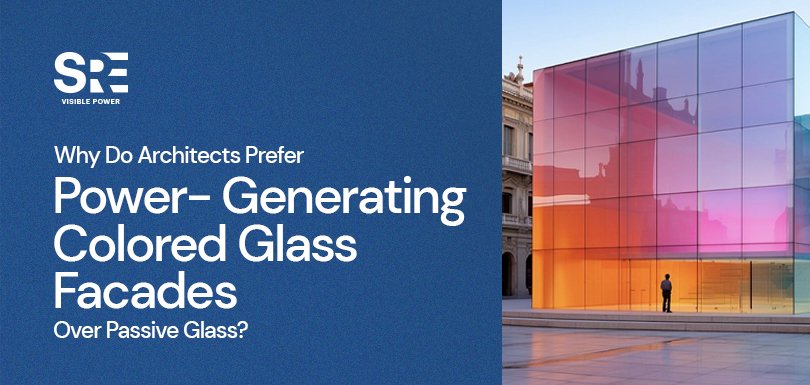
Shree Rang Energy (SRE) has introduced India’s first custom power-generating colored glass facade systems, designed specifically for modern architectural requirements.
Why Passive Glass Is No Longer Enough
Passive glass has traditionally been optimized for daylight control, insulation, and glare reduction. While these functions remain important, passive systems still rely entirely on external energy sources. In projects aiming for net-zero performance or green certification, this limitation becomes critical. Architects are now expected to integrate renewable energy within the building envelope itself, rather than treating sustainability as an add-on.
Power-Generating Glass as an Architectural Upgrade
Power-generating colored glass facades integrate photovoltaic technology directly into architectural glazing. This allows façades to generate electricity from sunlight without altering the building’s form. For architects, this represents a significant upgrade—transforming a passive surface into an active energy-producing element.
SRE’s approach focuses on seamless integration, ensuring the solar function does not overpower the architectural vision but works within it.
Aesthetics, Color, and Creative Control
One of the strongest reasons architects prefer SRE’s colored solar glass facades is creative flexibility. Unlike traditional solar panels, these systems allow control over color tones, transparency, and visual rhythm. Architects can use the façade as a design medium while embedding renewable energy performance into the structure.
This balance between aesthetics and efficiency eliminates the long-standing compromise between beauty and sustainability.
Conclusion
Architects prefer power-generating colored glass facades because they align with the future of architecture—where buildings generate energy, express sustainability, and maintain design excellence. With Shree Rang Energy, facades evolve into intelligent design elements rather than static skins.