


For decades, buildings have done one thing well , they’ve stood still.
They’ve looked beautiful.
They’ve reflected skylines.
They’ve carried glass-like jewelry.
But here’s the uncomfortable truth: most buildings still consume more than they contribute.
And that’s exactly why developers and architects are now turning toward power-generating colored glass facades.
The Shift: From Decorative to Productive Architecture
Architecture has always balanced two forces, aesthetics and function.
Glass facades brought light, transparency, and visual drama. They became symbols of modernity. Every commercial tower wanted that shimmering exterior.
But in 2026, the conversation has changed.
The question is no longer:
“How does the building look?”
It’s:
“What does the building do?”
Power-generating colored glass facades answer both.
They preserve design intent, color, texture, and transparency while quietly converting sunlight into energy.
In simple words:
The building starts paying its own electricity bill.
That changes everything.
Energy Costs Are No Longer a Footnote
Developers are practical. Romantic ideas don’t survive spreadsheets.
With rising energy costs and sustainability mandates tightening globally, operational efficiency is no longer optional. Tenants now ask about energy ratings. Corporates want ESG compliance. Investors want future-ready assets.
A façade that generates electricity reduces dependency on traditional power sources. That means:
- Lower long-term operating costs
- Better green building ratings
- Stronger appeal to premium tenants
- Higher long-term asset valuation
This isn’t an environmental charity.
This is financial intelligence.
Architects Refuse to Compromise on Design
For years, solar panels were treated like after thoughts, added on rooftops, visually separate from the architectural language.
Architects hated that compromise.
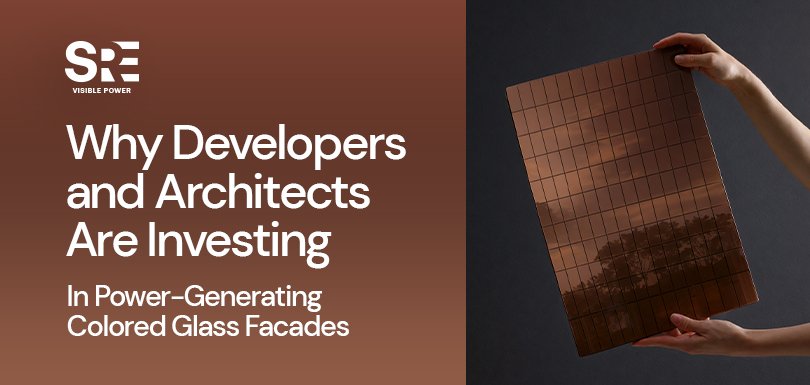
The brilliance of colored photovoltaic glass is that it integrates energy generation directly into the façade. No bulky add-ons. No design sacrifice.
You still get:
- Custom colors
- Seamless glazing
- Modern aesthetics
- Light control
But now the façade performs beyond visual impact.
It’s architecture that earns its existence.
Sustainability Is No Longer a Buzzword
Let’s be honest, sustainability used to be marketing copy.
Now it’s regulation.
Governments, investors, and urban planning bodies are increasingly pushing for net-zero and energy-efficient construction. Developers who ignore this shift will eventually fall behind.
Power-generating glass facades align perfectly with this direction.
They help projects qualify for:
- Green certifications
- Carbon reduction goals
- Long-term compliance with evolving building codes
Forward-thinking developers understand one thing:
It’s cheaper to build future-ready now than to retrofit later.
Brand Value Is Changing
Buildings today are brand statements.
Corporate headquarters, commercial towers, and institutional campuses, they all communicate something about the organization inside.
Imagine telling stakeholders:
“Our building produces its own power through its facade.”
That’s not a small detail. That’s positioning.
Developers see that environmentally intelligent buildings command stronger narratives, better PR value, and higher brand prestige.
And in competitive real estate markets, narrative matters.
Long-Term Asset Thinking
Smart developers don’t build for five years. They build for decades.
A building that consumes high energy and depends entirely on external supply may struggle with rising operational costs over time.
But a structure that integrates renewable energy at the design stage becomes more resilient.
Power-generating colored glass facades transform the building envelope from passive surface to active asset.
That’s not innovation for applause.
That’s innovation for longevity.
The Economics Are Maturing
Early-stage technologies are expensive experiments.
But photovoltaic glass systems have matured. Manufacturing capabilities are expanding. Integration is becoming more streamlined.
As scale increases, cost efficiency improves.
Developers today are not investing blindly; they’re evaluating lifecycle cost savings versus initial capital expenditure.
And increasingly, the math supports integration.
The Bigger Picture: Cities That Produce, Not Just Consume
Urban skylines are expanding at unprecedented rates.
Imagine if every major commercial facade in a city generated even a portion of its own electricity.
The cumulative impact would be enormous.
Architects and developers investing in power-generating colored glass facades aren’t just designing buildings. They’re contributing to a smarter urban future.
It’s the shift from:
“Glass for beauty”
to
“Glass with purpose.”
Final Thoughts
Why are developers and architects investing in power-generating colored glass facades?
Because:
- Energy efficiency is no longer optional
- Sustainability is becoming a regulation
- Tenants demand smarter buildings
- Design integrity must remain uncompromised
- Long-term asset value matters
And perhaps most importantly, because architecture is evolving.
The future of buildings isn’t just about standing tall.
It’s about standing responsible.
And facades that generate power while preserving beauty?
That’s not a trend.
That’s the next chapter of intelligent design.
Here we go.