


The Heritage of the Sun India has always been a nation that understands the value of light. For thousands of years, our economy and culture have been dictated by the movement of the sun. Our ancestors “farmed the light,” turning solar energy into the golden fields of grain in the North, the lush cotton plantations in the West, and the sweet jaggery of the South. The sun was our greatest resource, and the field was our most productive asset. However, as our society evolved, we began to move away from the soil and into the sky. Our horizontal fields have been replaced by vertical concrete jungles, and in this transition, we lost our connection to the harvest.
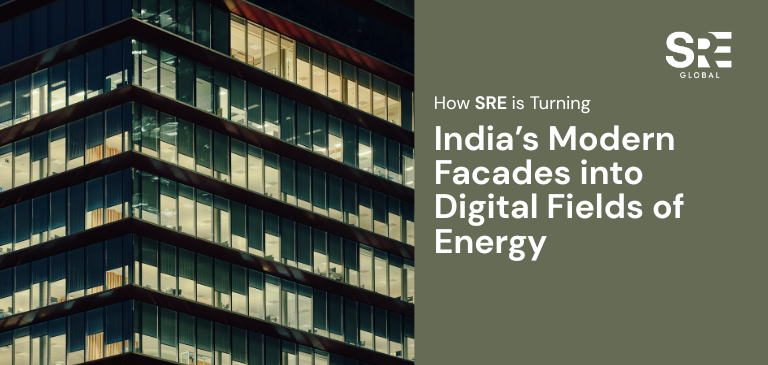
The Rise of the Vertical Harvest At Shree Rang Energy (SRE), we asked ourselves: Why should the harvest stop just because the landscape has changed? If the sun still shines on our cities, why aren’t our buildings catching it? This line of thinking led to the creation of the “Digital Field.” We have reimagined the skyscraper not as a consumer of resources, but as a producer. By utilizing the massive, untapped vertical surface area of India’s urban high-rises, we are reclaiming the sun’s potential. We aren’t just manufacturers; we are the new-age farmers of the urban landscape.
Why Horizontal Solar Isn’t Enough Traditional solar farms require vast tracts of land—land that is becoming increasingly scarce and expensive in a growing India. Furthermore, rooftop solar has its limitations; a 30-story building has a very small roof relative to its total energy needs. However, that same building has thousands of square meters of facade area. By turning these walls into “Digital Fields,” SRE allows buildings to harvest energy from the moment the sun rises until it sets. This vertical orientation is particularly effective in urban environments where shadows from neighboring buildings might block low-lying rooftop panels but leave the upper facades bathed in light.
Technology: The Modern Seed Just as a farmer selects the best seeds for his soil, SRE provides architects with the most advanced “digital seeds”—our coloured, power-generating glass modules. These modules are engineered to work in harmony with the Indian climate. They utilize high-efficiency crystalline silicon and thin-film technologies that can capture energy even from diffused light on a cloudy monsoon day. Our “Digital Fields” are constantly communicating with the building’s energy management system, ensuring that every watt of harvested power is used efficiently, whether it’s to light up an office floor or charge an employee’s electric vehicle in the basement.
Bridging the Gap Between Nature and Technology The transition to BIPV is more than just a technological upgrade; it is a philosophical shift. We are moving toward “Conscious Architecture.” This means designing structures that respect the environment they occupy. When an architect chooses an SRE facade, they are choosing to turn architecture into purpose. They are ensuring that the building gives back to the earth more than it takes. In cities like Delhi, Mumbai, and Bangalore, where the environmental cost of development is a major concern, these Digital Fields offer a way to grow without guilt.
Conclusion
A New Era for Indian Energy The sun that once nourished our ancestors’ fields is now ready to power our future. At Shree Rang Energy, we are proud to be the bridge between India’s agricultural past and its technological future. We are proving that the skyscraper can be just as productive as the farm. By turning every wall into power and every facade into a field, we are ensuring that as India grows taller, it also grows greener. It is time to stop looking at buildings as static blocks of glass and steel and start seeing them as living, breathing, harvesting organisms.