


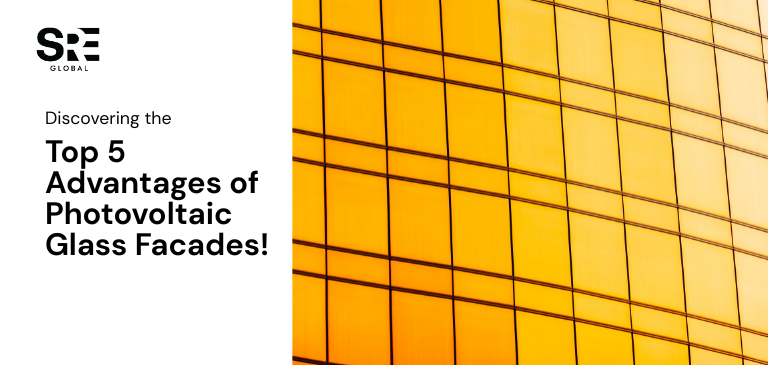
The Dawn of Active Architecture For decades, the architectural world viewed a building’s facade as a “passive” element—a shield designed to protect inhabitants from the elements. However, as India urbanizes at an unprecedented rate, the demand for energy is outstripping traditional supply. At Shree Rang Energy (SRE), we are leading a revolution where the building’s skin becomes an “active” participant in its survival. Building Integrated Photovoltaics (BIPV) is no longer a futuristic concept; it is a practical, scalable solution for the modern Indian developer. By replacing traditional glazing with Photovoltaic Glass Facades, we are redefining the relationship between energy and architecture.
1. The Transformation of Sunk Costs into Revenue Streams
Traditional building materials—whether they be ACP sheets, stone cladding, or standard toughened glass—are purely “sunk costs.” Once installed, they provide no financial return other than their basic utility. Photovoltaic glass, however, is a functional investment. By generating clean, renewable electricity directly from the building’s vertical surface, these facades offer a tangible Return on Investment (ROI). Over its lifespan, an SRE BIPV system doesn’t just pay for itself; it generates a profit by significantly reducing or even eliminating monthly utility bills. In the high-stakes world of Indian real estate, turning a building’s exterior into a revenue-generating asset is a game-changer.
2. Superior Thermal Management and HVAC Savings
India’s tropical climate poses a unique challenge: the “Greenhouse Effect” in glass-heavy buildings. Standard glass allows infrared radiation to penetrate, causing internal temperatures to soar and forcing air conditioning systems to work overtime. SRE’s Photovoltaic Glass is engineered with advanced thermal properties. It filters out harmful UV and heat-carrying infrared rays while converting that energy into electricity. This results in a significantly lower Solar Heat Gain Coefficient (SHGC). For a 20-story corporate tower, this can translate into a 30% to 40% reduction in HVAC energy consumption, which is often the highest operational cost for commercial buildings in India.
3. Achieving Global Sustainability Benchmarks (LEED & IGBC)
The modern corporate tenant is increasingly focused on ESG (Environmental, Social, and Governance) goals. To attract multinational corporations, developers must secure high-level green building certifications like LEED (Leadership in Energy and Environmental Design) or IGBC (Indian Green Building Council) credits. A Photovoltaic Glass Facade is one of the most visible and effective ways to earn these credits. It proves a commitment to on-site renewable energy generation, reduced carbon footprint, and innovative design. SRE helps developers navigate these certifications by providing the data and technology needed to turn a standard project into a sustainable landmark.
4. Acoustic Resilience and Urban Comfort
Beyond energy, urban buildings face the constant challenge of noise pollution. Whether it is the honking of traffic in Mumbai or the bustle of a commercial hub in Ahmedabad, internal peace is a luxury. Because BIPV glass is constructed using multiple layers of specialized lamination and photovoltaic cells, it possesses naturally superior acoustic insulation properties compared to single or double-pane standard glass. It creates a sanctuary for the inhabitants, making it an ideal choice for hospitals, luxury hotels, and high-end residential apartments where silence is synonymous with premium living.
5. Future-Proofing Against Grid Instability
As the demand for electric vehicles (EVs) and digital infrastructure grows, the load on India’s national grid is reaching a breaking point. Buildings that rely solely on the grid are vulnerable to price hikes and supply inconsistencies. By integrating BIPV, a building gains a degree of energy independence. During peak daylight hours—exactly when commercial activity is at its highest—the facade is at its most productive. This decentralized power generation reduces the “Peak Load” demand, ensuring that the building remains operational and efficient even during times of grid stress.
Conclusion
The advantages of Photovoltaic Glass Facades extend far beyond simple electricity generation. It is about creating a smarter, cooler, quieter, and more profitable building. At Shree Rang Energy, we provide the technical expertise to ensure that your facade is not just a wall, but a window into the future of sustainable living.